
When Flesh Becomes the Medium
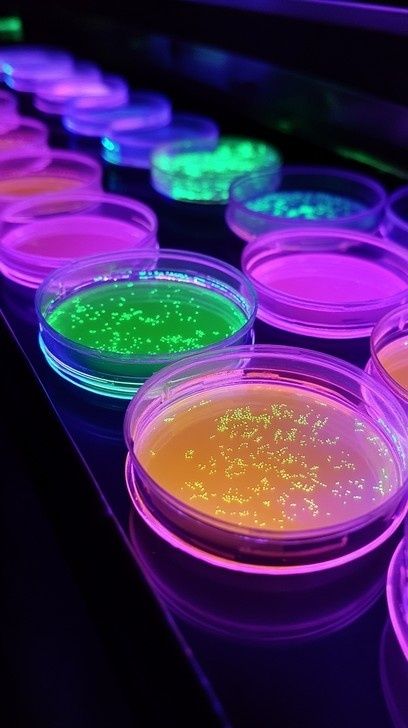
Bioart is often reduced to spectacle: a dish of glowing cells, a genetically altered organism, or an unsettling object that appears to have escaped from a laboratory. That reading misses the discipline at the center of the practice. Bioart treats living cells, microbes, tissues, and synthetic biological systems as material conditions that must be cultivated, constrained, shaped, monitored, and interpreted. The result is not merely an image of life. It is an artwork produced through life”s own physical operations.
This introduces a profound shift in sculptural thinking. Marble accepts the chisel, clay yields to pressure, and bronze holds a form after casting. Living matter breathes, divides, consumes nutrients, responds to temperature, and eventually changes or dies. The artist therefore works with a medium that has agency without necessarily having intention, and with processes that cannot be completely stabilized. The trajectory from clinical laboratory to contemporary gallery pedestal is consequently not a simple transfer of technology. It is a redefinition of what making can mean when form is partly authored by metabolism.
Scaffolding and Cellular Life in the Studio
The modern bioart studio owes much to the Tissue, Culture & Art Project, established in Perth in 1996 by Oron Catts and Ionat Zurr. Their work made tissue engineering available as a cultural and philosophical material, not only as a medical technique. The project”s “semi-living” sculptures used cells and tissues isolated from organisms and cultivated into predetermined forms through laboratory intervention. In 2000, Catts and Zurr helped establish SymbioticA at the University of Western Australia-a pioneering wet-biology artistic laboratory that operated for nearly twenty-five years until its permanent closure in June 2024-creating a foundational research environment in which artists could work alongside life scientists and treat artistic inquiry as a rigorous mode of wet-lab investigation.
In practical terms, tissue-based sculpture begins with a scaffold. A scaffold is a temporary or permanent three-dimensional structure that gives cells somewhere to attach, spread, and organize. It may be fabricated from polymers, hydrogels, collagen, or other biomaterials selected for porosity, flexibility, and compatibility with the chosen cell type. Nutrient broth then has to reach the developing tissue. In simple cultures this may occur through diffusion, but thicker forms often require perfusion systems that circulate oxygenated medium through channels. Emerging bioprinting systems extend this logic by depositing cells and supportive biomaterials layer by layer. Research into microgravity bioprinting is especially revealing because reduced gravitational stress may allow delicate biological structures to assemble without collapsing under their own weight.
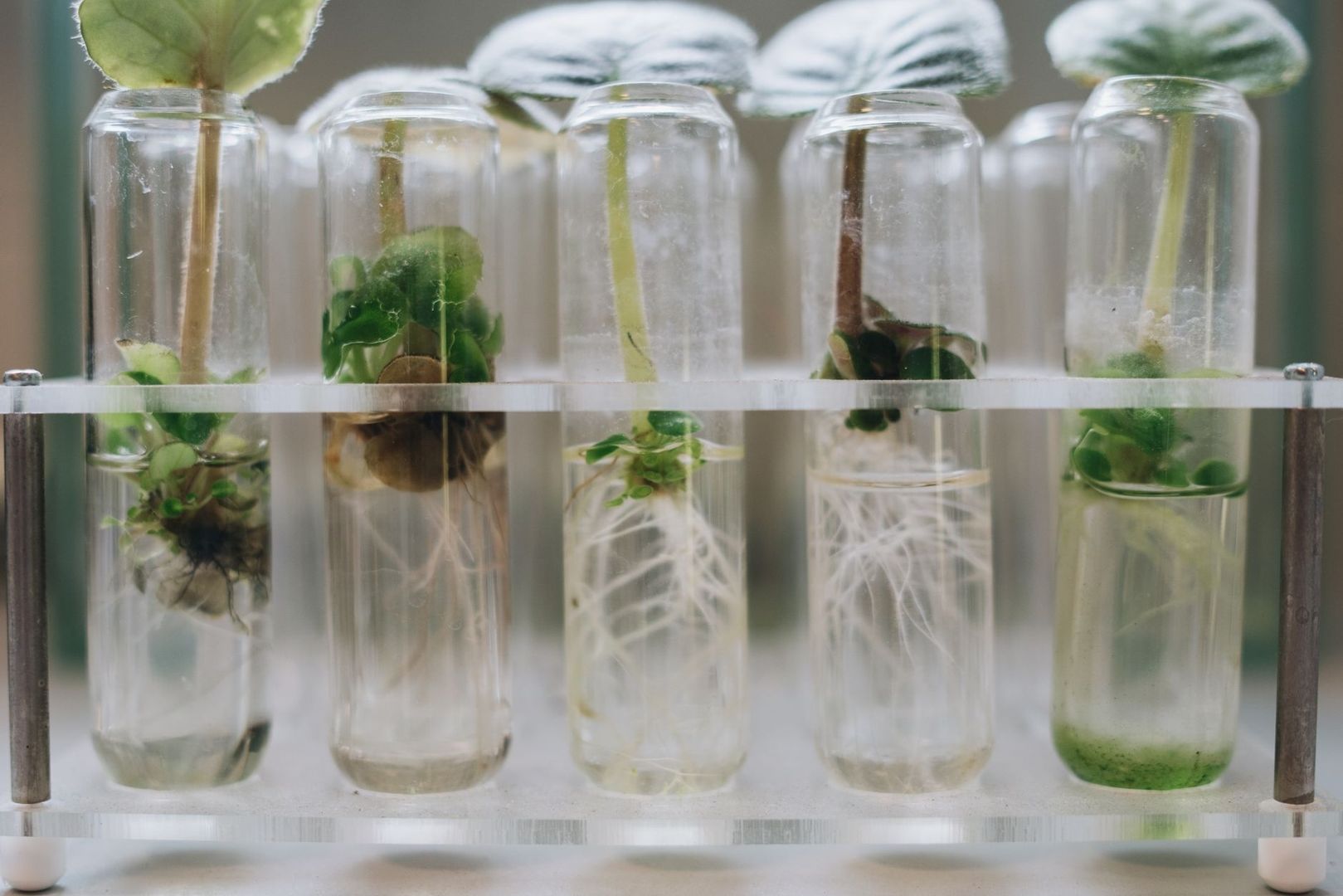
The sculptural problem is therefore structural, chemical, and temporal at once. A cell does not simply occupy a form; it adheres, migrates, contracts, signals, and responds to mechanical stress. A rigid polymer may preserve an outline while preventing healthy growth. A soft hydrogel may support cellular activity while deforming under handling. Unlike bronze, living tissue can remodel the very architecture intended to contain it.
- Geometry: the scaffold determines the initial silhouette, but cells may thicken, contract, or migrate beyond its intended boundaries.
- Porosity: openings must permit the exchange of oxygen, nutrients, waste, and sometimes signaling molecules.
- Mechanical compliance: the scaffold”s stiffness influences how cells attach and what kind of tissue they form.
- Environmental stability: temperature, pH, humidity, and sterility become part of the artwork”s material specification.
For artists and conservators translating living matter into exhibition spaces, research on microbial colonisation and substrate interaction in npj Heritage Science demonstrates how dynamically living organisms respond to and alter their immediate material environments. Vulnerable biological forms cannot be separated from the systems that sustain or constrain them. The visible object may look minimal, but its actual sculpture includes reservoirs, tubing, sensors, filters, protocols, and contingency plans. The gallery must accommodate the living work rather than pretending that infrastructure is merely backstage.
Chromogenic Microbes as Living Palettes
Microbial pigments offer a different route into biological sculpture. Instead of growing a tissue into a predetermined shape, the artist can cultivate organisms whose visible color becomes a time-based mark, stain, gradient, or surface event. Species such as Chromobacterium violaceum can produce deep violet compounds, while Serratia marcescens is historically associated with red pigmentation. These organisms are not simply bottles of paint. Their color depends on strain, nutrients, temperature, density, growth phase, and environmental stress.
This variability gives microbial color a visual force that synthetic pigment rarely possesses. A conventional chemical colorant is manufactured for consistency, dispersed into a binder, and expected to remain optically stable. A microbial chromophore is produced through metabolism. It can appear gradually, intensify across a colony, shift with conditions, or disappear when the culture is deactivated. That makes the pigment both image and evidence: a record of biological activity that carries its own duration.
The environmental argument also matters, although it should not be simplified into the claim that every biological pigment is automatically sustainable. Synthetic dyes can generate toxic waste, while plant pigments may suffer from instability, land requirements, and inconsistent reproduction. Microbial production may offer economical cultivation, scalability, biodegradability, and lower toxicity for some compounds, but it still requires careful assessment of energy use, extraction methods, containment, and disposal. The review Bacterial Pigments and Their Multifaceted Roles in Contemporary Biotechnology and Pharmacological Applications explains why pigment-producing bacteria, fungi, yeasts, algae, and archaea have attracted interest across textiles, cosmetics, paints, food, and biomedical research.
| Traditional material | Typical behavior | Potential biological counterpart |
|---|---|---|
| Mineral pigment | Stable, opaque, and physically inert once bound | Melanin-producing microbes, which can create dark tones through active or extracted compounds |
| Synthetic dye | Consistent color and broad industrial availability, with possible toxic waste concerns | Microbial chromophores, which may be biodegradable and produced through cultivation |
| Plant dye | Organic and often biodegradable, but vulnerable to light, pH, and batch variation | Carotenoids and violaceins, whose behavior can be tuned through culture conditions and processing |
| Fungal colorant | Complex hues and useful secondary metabolites, often dependent on species and growth conditions | Filamentous fungal cultures that can operate as both pigment source and expanding surface |
For the sculptor, the key decision is whether the organism remains alive in the finished work or whether the pigment is harvested and fixed. A living palette turns the installation into an active ecology, demanding containment and maintenance. An extracted pigment permits more conventional conservation while preserving a trace of biological production. Both strategies can be compelling, but they make different claims about authorship, time, and the status of the artwork.
The Rigors of Containment and Biosafety Protocols
Containment is not an administrative burden added after the creative work. It is part of the form. A gallery displaying nonpathogenic organisms may operate within Biosafety Level 1 practices, while work involving organisms that present greater hazards or require more controlled handling may demand Level 2 procedures and institutional oversight. The correct classification depends on the organism, genetic modification, route of exposure, volume, equipment, and local regulation. Cultural institutions should never infer a biosafety category from an artwork”s appearance or from the artist”s intention.
A museum-grade bioreactor must make its invisible conditions legible and controllable. Sealed vessels, secondary containment, sterile air filtration, pressure management, leak detection, and access restrictions are not merely technical accessories. They shape the visitor”s experience and establish a contract of trust. A transparent chamber can reveal growth while concealing vulnerable connections. A fully opaque housing may offer superior control but convert biological activity into a remote readout, such as light, sound, or projected data. The strongest installations make this negotiation visible without turning safety into theatrical panic.
The overarching operational principle remains clear: biological installations require documented risk assessment, trained personnel, emergency procedures, and a maintenance plan that remains active throughout the exhibition. SymbioticA”s historical model remains instructive precisely because it embedded artists within accredited academic research facilities, establishing early standards for wet-lab biosafety rather than treating laboratory protocols as an outsourced service.
- Confirm the biological system: document the species or cell line, genetic status, growth medium, expected hazards, and approved biosafety level.
- Inspect the enclosure: test seals, ports, tubing, pressure behavior, secondary containment, and sterile air filters before the work enters the gallery.
- Record baseline conditions: log temperature, pH, humidity, nutrient levels, optical appearance, and any sensor readings.
- Control access: define who may feed, sample, repair, or deactivate the work, and keep written records of every intervention.
- Monitor continuously: establish thresholds for leaks, contamination, abnormal growth, power failure, temperature drift, and filtration problems.
- Prepare failure responses: keep spill materials, decontamination supplies, backup power where appropriate, and clear escalation contacts on site.
- Plan decommissioning: determine how cultures, tissues, media, filters, and contaminated disposables will be inactivated and disposed of according to institutional rules.
The checklist is also an aesthetic tool. A slow culture may require visitors to return repeatedly, while a fast-growing organism can create an urgent choreography of feeding and containment. A failed seal may destroy the work, but an over-engineered enclosure can flatten its visual tension. The challenge is to design infrastructure that protects life without pretending that biological life is mechanically predictable.
Ethical Gravity and the Post-Human Aesthetic
Traditional sculpture represents bodies, animals, and environments from an external position. Bioart complicates that distance by placing semi-living systems inside the artwork itself. The viewer is no longer looking only at a depiction of vulnerability, consumption, or reproduction. The viewer may be standing before a maintained culture that requires care, occupies resources, and raises questions about whether artistic value can justify biological intervention. The work”s agency is limited, but it is not imaginary. Growth, decay, and response become material facts.
This shift naturally provokes anxiety. Genetic manipulation and tissue experimentation carry histories of medical exploitation, industrial agriculture, colonial extraction, and unequal access to scientific power. A responsible exhibition should not use shock as a substitute for ethics. It should identify the origin of cells, the status of consent, the treatment of donor material, the possibility of suffering, the reason for genetic intervention, and the planned fate of the organism after exhibition.
- Make provenance visible: explain where cells, microbes, tissues, and genetic constructs came from.
- Separate novelty from necessity: clarify what the biological method contributes that a nonliving material could not.
- Invite disagreement: public discussion should permit concern, refusal, and criticism rather than staging consensus.
- Share technical authority: artists, scientists, conservators, ethicists, and communities should have meaningful roles in decision-making.
Institutional precedents show that this conversation has moved beyond isolated laboratory experiments. The Biodesign Challenge connects biotechnology, art, and design through student projects that are expected not only to propose applications but also to critique them. Its 2026 event brought finalists from more than 50 schools in over 20 countries into a public forum. The Whitney Biennial 2026 likewise foregrounded interspecies, technological, ecological, and infrastructural relationships across a broad group of artists, demonstrating how biological questions now sit within larger debates about technology and collective life.
Carving the Future of Responsive Matter
Bioart represents a rigorous material evolution of modern sculpture because it demands mastery of conditions rather than mastery of a single tool. The artist must understand scaffolding, fluid movement, cellular attachment, microbial metabolism, sterility, sensor feedback, and conservation. Form is still intentional, but intention operates through a negotiated system. The finished piece may be a vessel, a tissue structure, a colored colony, or an installation whose most important elements are invisible protocols and carefully timed interventions.
As responsive biological media become more accessible, the boundary between scientific instrumentation and sculptural creation will grow less stable. Bioreactors may function as pedestals, nutrient pumps as kinetic mechanisms, and growth data as compositional scores. The most compelling future works will not merely decorate biotechnology or imitate organic form. They will expose the physical costs of maintaining life, make dependency visible, and use biological change as a genuine sculptural language. In that expanded field, carving no longer means removing material from a block. It means designing the conditions under which matter can continue becoming something else.