
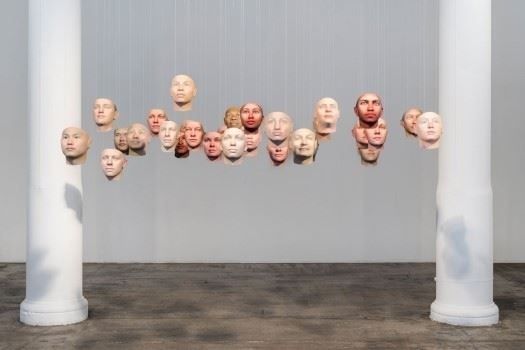
The Allure of the Abruptly Uncomfortable
Why does the eye linger on the image that makes the stomach tighten? A polished landscape, balanced still life, or flawlessly proportioned object can offer immediate pleasure, yet that pleasure often resolves quickly. The gaze recognizes harmony, absorbs its order, and moves on. Unsettling art behaves differently. A distorted face, an apparently soft surface that looks biological, or a familiar domestic form rendered threatening creates a snag in perception. The viewer cannot simply consume it. The work asks for a second look, then a third, because its meaning refuses to settle at the speed of recognition.
This is the central paradox of the aesthetics of discomfort. Unease is not an accidental defect but a deliberate artistic architecture, constructed through clashes between material, scale, subject, context, and expectation. The strongest unsettling works do not merely shock. They recruit the body through tension, alert the mind through contradiction, and leave an afterimage that continues operating beyond the gallery. For collectors, designers, critics, and visitors, the question is not whether a work is pleasant, but whether its discomfort has been precisely made.
The Biology of Hesitation and the Disquieting Gaze
Visual perception is not a neutral window. It is an active prediction system, constantly comparing incoming forms with stored expectations about bodies, faces, objects, and spaces. When those expectations are violated, attention becomes more effortful. An almost-human face with an incorrect expression, a body with an unfamiliar proportion, or a domestic object contaminated by organic cues can trigger an immediate shift from recognition to inspection. The viewer moves from “I know what this is” to “What exactly am I seeing, and should I approach it?”
That hesitation is aesthetically productive. Rapid perceptual capture may seize attention, but sustained scrutiny depends on what happens afterward. Working-memory research describes perception as involving both an early, capture-like influence and a slower drift toward a developing decision. In art, this helps explain why an anomalous image can first produce a bodily jolt and then occupy thought for minutes or days. The first response is fast and protective; the second is interpretive. A successful work of discomfort makes both phases visible.
The Penn Center for Neuroaesthetics research is especially relevant because its work on beauty and morality examines how facial anomalies, including scars and paralysis, influence judgments of social traits. Readers consulting related evidence may first encounter a Checking your browser notice before the page loads. Such findings do not mean that an anomalous appearance reveals anything about a person”s character. Rather, they expose the troubling shortcuts through which perception can influence empathy, social evaluation, and even dehumanizing responses. Art can make those shortcuts perceptible instead of allowing them to operate invisibly.
- Expectation: the viewer identifies a familiar category such as face, body, home, or tool.
- Violation: an irregularity interrupts the predicted pattern.
- Somatic alert: tension, aversion, curiosity, or withdrawal enters the experience.
- Reflection: the viewer begins evaluating not only the object, but also the assumptions behind the reaction.
This layered response also supports a broader taxonomy of artistic impact. Research involving art historians, neuroscientists, philosophers, psychologists, and theologians identified distinct descriptive and impact dimensions, showing that artworks can be analyzed through what they look like and what they make viewers think or feel. Discomfort therefore belongs to a wider field of possible effects. It can produce knowledge, social recognition, emotional disturbance, or transformation, depending on the work and the viewer”s circumstances.
Material Subversion and the Architecture of the Uncanny
The uncanny begins where familiarity loses its guarantee. Ernst Jentsch described the feeling in relation to uncertainty and the unfamiliar, while Sigmund Freud later emphasized the disturbing return of what is both known and concealed. The German term unheimlich, often translated as “unhomely,” contains this double movement. Something becomes frightening not because it is wholly alien, but because it appears to emerge from a familiar world with its hidden content exposed. The Tate”s account of the uncanny traces this development from psychology into visual art, popular media, and the modern idea of the uncanny valley.
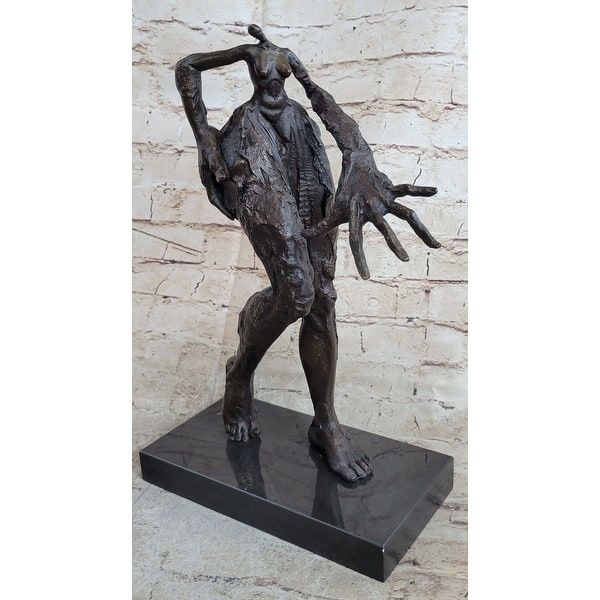
Contemporary sculpture can build that instability directly into matter. Silicone resembles skin while remaining unmistakably manufactured. Hair signals intimacy, grooming, illness, or death depending on its arrangement. Oxidized metal carries the visual language of age and injury, turning industrial strength into a surface that appears diseased. When these materials enter a gallery, they disturb the usual division between object and organism. The viewer reads texture through touch even when touching is prohibited, and imagined tactility becomes part of the work”s psychological machinery.
| Material strategy | Initial expectation | Disruptive effect |
|---|---|---|
| Silicone skin or flesh-like surfaces | Softness, warmth, bodily familiarity | Artificial intimacy and uncertainty about the living |
| Strands of hair | Personal presence and human identity | Contamination, absence, or involuntary closeness |
| Oxidized metal | Durability, industry, structural control | Decay, corrosion, and the suggestion of wounded matter |
| Domestic forms at distorted scale | Safety, routine, and usability | Spatial threat and loss of control |
The material conflict becomes more powerful when it is carefully calibrated. Excessive gore can close interpretation by announcing its intended response. A quieter contradiction often lasts longer: a couch that seems to breathe, a polished vessel carrying a trace of bodily residue, or a portrait whose skin is flawless except for one impossible interruption. The work gives the mind enough familiarity to establish trust, then withdraws that trust through texture, scale, or context.
This strategy has also become a vehicle for examining gender, disability, race, class, and technological identity. The uncanny is not merely a formal effect floating above politics. It can describe what happens when a supposedly safe home, nation, body, or social category becomes unstable. Contemporary discussions of feminist uses of the uncanny show how artists reclaim imagery historically associated with male Surrealist fantasies and redirect it toward trauma, domestic danger, socialized aggression, and forms of identity that dominant culture has tried to conceal.
Breaking the Circuit of Passive Visual Consumption
In an environment saturated with images, easy beauty can become another form of speed. A pleasing composition may receive a glance, a favorable judgment, and immediate replacement by the next image. This is not an indictment of beauty. Harmony can be complex, intellectually rigorous, and emotionally profound. The problem arises when visual fluency becomes frictionless, leaving no resistance against the rapid circulation of attention. Unsettling art interrupts that circuit by making the act of looking feel consequential.
Cognitive friction gives an artwork a stronger chance of becoming episodic memory rather than disposable visual data. The viewer remembers not only the image, but also the bodily conditions of encountering it: the pause at the threshold, the impulse to step closer, the recoil from a texture, or the realization that an apparently familiar object has become hostile. Contemporary cognitive neuroscience and predictive processing models demonstrate how sensory prediction errors arrest attention and alter perceptual decision-making. When visual input violates internal prior expectations, neural circuits suspend automatic processing, increasing sensory gain and deploying deliberate, evidence-accumulating drift-diffusion mechanisms to resolve ambiguity. In aesthetic encounters, this unexpected visual information forces an abrupt shift from rapid categorization to sustained visual problem-solving.
The physiological and interpretive process often unfolds as a loop rather than a straight line. Tension encourages inspection; inspection generates hypotheses; failed hypotheses sustain tension; eventual interpretation provides partial relief without necessarily eliminating the original disturbance. The best works do not resolve every contradiction. They convert the desire for resolution into a continuing relationship with the object.
- Capture the body. Use scale, proximity, sound, texture, or visual irregularity to create an immediate interruption.
- Withhold complete explanation. Allow the viewer to recognize enough of the subject to generate questions, but not enough to close them.
- Invite reappraisal. Introduce conceptual, historical, or material information that makes the first reaction appear incomplete.
- Leave a residue. Build an image, sensation, or ethical question that remains active after the viewer has left.
For designers and curators, this framework has practical consequences. A disturbing object loses force if the surrounding installation over-explains it, isolates it as a spectacle, or provides no space for the viewer to regulate attention. Conversely, a carefully paced room can make discomfort legible. Distance, lighting, sightlines, and the sequence of neighboring works all affect whether unease becomes thought or simply defensive rejection.
Embodied Tension as Radical Artistic Strategy
Contemporary sculptors frequently make the viewer”s body part of the composition. Monumental forms can crowd a corridor, force a detour, or make the visitor feel observed rather than merely observing. Low-hanging elements can produce caution; floor-based forms can challenge the assumed privilege of walking space; intimate scale can create the uncanny sensation of entering another person”s psychological territory. Spatial intimidation works because it transforms interpretation into posture. The viewer does not simply understand vulnerability conceptually; the viewer must navigate it physically.
The grotesque can intensify this strategy by refusing ideals of bodily coherence, cleanliness, and controlled presentation. In feminist and politically engaged practices, distortion may reclaim realities that polite visual culture excludes: reproductive ambivalence, chronic pain, disability, racialized surveillance, trans experience, aging, illness, and the violence hidden inside domestic or national myths. Discussions surrounding exhibitions such as Uncanny at the National Museum of Women in the Arts demonstrate how familiar spaces can be made “unhomely” in order to reveal anxiety and trauma rather than conceal them.
- Scale: make the body feel small, exposed, or unusually powerful.
- Proximity: control the distance at which a material begins to resemble skin, hair, or breath.
- Obstruction: interrupt ordinary movement so that interpretation becomes embodied.
- Reversal: transform disgust into a question about who is allowed to appear, speak, or remain visible.
Discomfort becomes radical when it gives viewers interpretive agency rather than merely punishing them. The work may begin with revulsion, but it should create a route toward attention, context, and responsibility. That route can be narrow and demanding. It can also be emotionally generous, because the viewer is given permission to notice defensive reactions without treating them as final truths.
Embrace the Art That Refuses to Soothe
Unease is not the opposite of aesthetic presence. In many ambitious works, it is the condition that makes presence possible. When an artwork disrupts automatic recognition, the viewer becomes newly aware of eyes, breath, posture, memory, and judgment. The image is no longer consumed at a distance. It occupies the room and, for a time, occupies the nervous system. That intensity should not be confused with mere shock. Discomfort earns its force through material precision, conceptual necessity, and sustained attention to how viewers are likely to move through the work.
Engaging such art requires a deliberate practice. Notice the first bodily response before rushing to explain it. Identify the formal trigger, whether it is scale, surface, symmetry, proximity, or subject matter. Ask what cultural assumption the work has disturbed, and whether the discomfort belongs to the object, the viewer, the surrounding context, or all three. Curators can support this process through pacing, accessible interpretation, and room for silence rather than defensive overstatement. Culture needs forms that resist visual complacency because perception, left unchallenged, becomes habit. The unsettling artwork breaks that habit open, not to leave the viewer stranded in fear, but to make looking active again.