
When Art Is Born to Rot
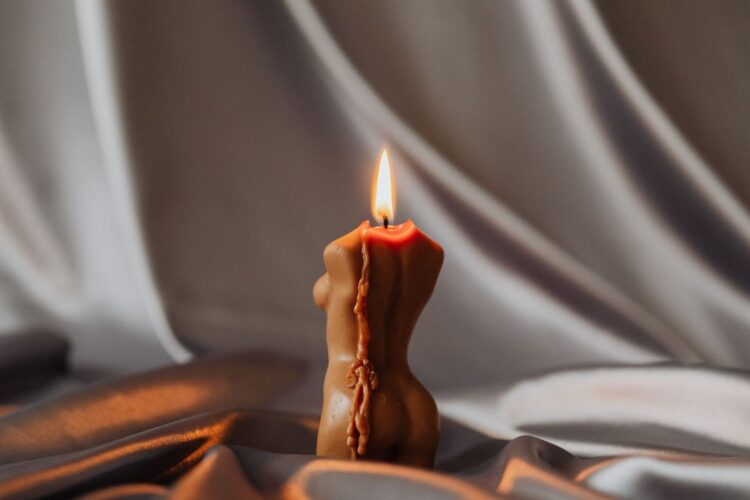
The traditional museum compact is deceptively simple: an artwork enters a collection, and the institution promises to keep its physical substance intact for as long as possible. Climate control, sealed cases, careful handling, and restorative treatment all serve that promise. Yet some contemporary works arrive already carrying the conditions of their own disappearance. They are built from chocolate, latex, flowers, bread, wax, hair, dust, food, or dung. Their surfaces crack, their colors shift, their scents fade, and their structures attract the same insects and microorganisms that transform the world outside the gallery.
For artists working with such materials, deterioration is not necessarily damage. It can be the subject, the mechanism, or even the duration of the work. The challenge is especially visible in the practices of artists such as Dieter Roth, Anya Gallaccio, and Chris Ofili, whose materials make permanence feel less like a virtue than an institutional fantasy. In this context, contemporary conservation practice is shifting from a battle against time toward a more exacting task: identifying what kind of change the artwork requires, documenting that change, and deciding when care becomes interference.
The Anatomy of Unstable Mediums
Unstable materials do not simply deteriorate; they behave. Chocolate softens, blooms, attracts insects, and can collapse under fluctuating temperatures. Latex oxidizes, loses plasticity, darkens, and becomes brittle. Flowers desiccate, flatten, discolor, and surrender their original volume. Elephant dung carries biological and symbolic associations that make it impossible to separate material from context. These changes produce an artwork that is less an object than a sequence of material states.
Dieter Roth made this logic especially explicit. His edible works used chocolate, bread, cheese, yogurt, sugar, spices, and other substances that could be colonized by mold, beetles, and microorganisms. As Tate”s research on Roth explains, decay in these works is not an accidental consequence but a visible creative process involving chance, color, deformation, mortality, and time. The artwork”s meaning therefore resides not only in its initial appearance, but also in the transformations that appearance sets in motion.
Anya Gallaccio”s installations of flowers similarly place duration at the center of form. The flowers are not merely decorative units arranged into a permanent composition. Their wilting, drying, and eventual collapse alter the viewer”s relationship to scale, beauty, labor, and loss. Chris Ofili”s use of elephant dung operates differently, but with the same insistence that material carries cultural force. The dung is at once support, pigment, sculptural element, and provocation. Removing its physical specificity would weaken the work”s conceptual pressure.
Artists often select unstable media for several connected reasons:
- Resistance to commercial permanence: Perishable materials challenge the assumption that value depends on durability, scarcity, and flawless condition.
- Visible temporality: Change becomes part of the composition, allowing time to function as an artistic tool rather than an external threat.
- Embodied associations: Food, bodily matter, plants, and waste bring scent, appetite, disgust, labor, and mortality into the gallery.
- Controlled uncertainty: Biological and chemical processes introduce variables that cannot be fully scripted, creating a productive tension between intention and chance.
This does not mean every alteration is acceptable. A work may be designed to rot, yet still depend on a particular scale, arrangement, or rate of transformation. The conservator must distinguish between the decay that animates the piece and the decay that destroys its ability to communicate.
Freezing Time versus Honoring the Decay
The conservator”s dilemma begins with a contradiction. Intervention can protect an artwork from collapse, pests, or hazardous emissions, but it can also remove the very forces that give the work its conceptual life. Freezing a decaying object at its first exhibition state may preserve an image of the artwork while erasing its duration. Conversely, allowing every process to continue without limits may reduce a complex work to an unrecognizable residue.
The international conservation project Modern Art Who Cares? demonstrated why modern and contemporary works resist universal treatment standards. Its case studies included disintegrating wax, foam, plastics, sponge, chipboard, hay, rust, dirt, and potentially carcinogenic substances. The project showed that conservation decisions must address not only material stability but also authenticity, artistic intention, technical knowledge, and the relationship between meaning and matter.
The difference between conventional conservation and ephemeral stewardship can be made clearer through a comparative framework:
| Traditional conservation | Ephemeral stewardship |
|---|---|
| Seeks to stabilize the object | Seeks to understand and manage its transformation |
| Often privileges an original physical state | May treat multiple states as authentic |
| Minimizes environmental variation | May permit controlled environmental change |
| Repairs visible damage where possible | Distinguishes meaningful decay from destructive failure |
| Uses the object as the primary record | Combines object, process, documentation, and testimony |
Institutional anxiety remains entirely practical. Organic matter can attract pests, support fungal growth, emit odors, or release volatile compounds into a gallery. Plastics may off-gas as they age. PVC, for example, can release hydrochloric acid and plasticizer, damaging neighboring materials as well as itself. The conservation of Dieter Roth”s artist”s book Snow revealed the complexity of such problems: pressure-sensitive adhesives had discolored and lost tack, PVC sleeves had emitted damaging compounds, and fragile papers had become brittle and distorted.
Food-based installations create another layer of responsibility. In Antoni Miralda”s Santa Comida, culturally specific food offerings form part of participatory shrines. Replacement may be necessary before decomposition, but replacement also affects cost, labor, cultural meaning, and the work”s visual continuity. Research at MACBA explored safe preservation methods involving essential oils and spices, including cinnamon, cloves, thyme, and lavender. Such measures do not simply make food permanent. They create a carefully negotiated interval in which the material can remain legible without becoming a biological hazard.
Setting the Rules of Deterioration
The most reliable conservation protocol often begins before the artwork enters the museum. Contemporary conservators interview living artists, asking precise questions about materials, substitutions, acceptable changes, display conditions, handling, repair, and the point at which a work should be remade. These conversations can be unusually direct. An artist may want latex to remain glossy, flowers to wilt naturally, or a food object to be replaced according to a specific recipe. Another may consider discoloration essential and reject any attempt to restore freshness.
Specialists such as Christian Scheidemann have worked with artists and collections containing dung, chewing gum, human hair, wax, rubber, food, and latex. The work involves more than technical repair. It can intersect with ownership transfers, insurance claims, condition reports, exhibition design, and questions about how much a collector is entitled to alter. A truthful condition report is therefore an ethical document. It must record what has happened without disguising deterioration merely to protect an object”s market value.
A practical framework for defining acceptable degradation can proceed in stages:
- Identify the material behavior. Determine whether the change is chemical, biological, mechanical, environmental, or a combination of factors.
- Establish the artist”s intent. Review interviews, installation instructions, correspondence, studio records, and statements about replacement or decay.
- Separate process from failure. Ask whether the alteration produces meaning, remains within the work”s expected range, or threatens structural safety and interpretive access.
- Set intervention thresholds. Define conditions that require action, such as pest activity, toxic emissions, collapse, or loss of essential components.
- Record transition states. Photograph, scan, measure, describe, and date changes so that the artwork”s trajectory remains available to future viewers.
- Reassess after display. Conservation is not a single decision but a continuing negotiation as the material and its context evolve.
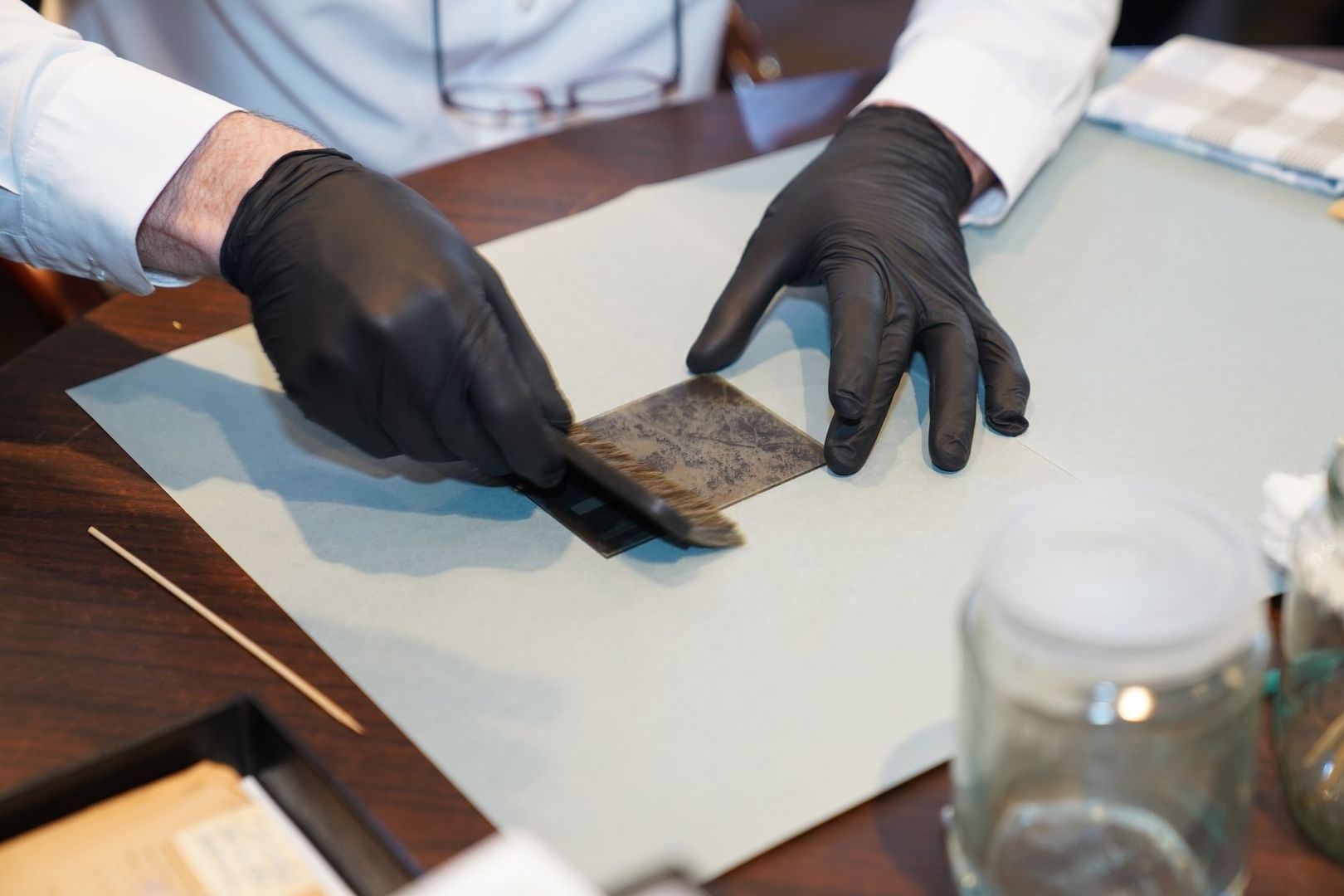
For works that are fundamentally process-based, the transition record may become more important than any single “original” condition. A condition report can include color charts, dimensional measurements, scent observations, environmental readings, microscopy, and accounts of audience interaction. In this model, documentation does not replace the artwork, but it gives the artwork a second structure: an evidentiary layer that allows future conservators to understand what changed and why that change mattered.
The Archival Afterlife of Fleeting Works
When physical matter disintegrates, the artwork does not necessarily vanish without remainder. Photography can preserve changing configurations, while video can record installation, handling, audience response, and the pace of transformation. Scent records, material recipes, environmental data, conservation reports, and artist interviews can capture dimensions that a static image cannot. Yet each form of documentation is selective. A photograph may preserve the look of mold without its smell. A written description may identify the texture of dried flowers without conveying their fragility. A digital file may show an installation while excluding the bodily unease produced by standing near it.
This problem has clear parallels in performance and dance. Notation, rehearsal records, and recordings can transmit structure, but they cannot fully reproduce the embodied event. A disappearing sculpture similarly survives through a constellation of traces rather than a single substitute object. Its archival identity may include:
- Photographs of installation and successive material states
- Video of audience interaction, replacement, handling, or collapse
- Material recipes, technical diagrams, and environmental specifications
- Artist testimony and interviews with conservators, installers, and witnesses
- Visitor memories, sensory descriptions, and participatory accounts
This complicates provenance. For a conventional painting, provenance follows a relatively stable object through changes of ownership. For an ephemeral work, provenance may track versions, reconstructions, replacements, and documented events. The relevant question is not only where the object has been, but which phase of its life a particular record describes. A later remake may be authorized and conceptually faithful while still being materially distinct from the first iteration.
The result is not a weaker cultural legacy, but a more layered one. The work persists as matter, instruction, memory, evidence, and possibility. Like a performance, it can be authentic without being permanently repeatable. Like a living system, it can remain itself through alteration rather than despite it.
Embracing the Poetry of Impermanence
Resisting entropy is sometimes a disservice to creative truth. When conservation restores a decaying work to an imagined state of freshness, it may protect appearance while silencing the work”s argument about appetite, mortality, labor, or time. Ethical care does not mean allowing neglect. It means recognizing that restraint can be as sophisticated as repair, and that a conservator”s responsibility may be to maintain the conditions of change rather than eliminate change itself.
Impermanent art makes the museum visit unusually vital. A viewer may encounter flowers at one stage of collapse, latex at one point in its darkening, or food just before its replacement. That encounter cannot be perfectly repeated, and its unrepeatability is part of the experience. In an age of fluid materiality, cultural legacy is no longer limited to objects that survive unchanged. It can also reside in carefully documented transformations, authorized reactivations, sensory memories, and the disciplined acknowledgment that some artworks are most faithful when they are allowed to become something else.